The HSK (Hanyu Shuiping Kaoshi) is the official Chinese proficiency test — Mandarin’s closest equivalent to TOEFL or IELTS. In 2026 the system is shifting: a new syllabus (Nov 2025) and sample exam structures (Dec 2025) are set for July 1, 2026 implementation.
This page is your hub for the new HSK (often called HSK 3.0): levels, vocabulary scale, paper structure, speaking, and how to prepare without drowning in word lists.
Not sure which band you are? Take the free HSK level test (unofficial, ~2 minutes), then use the level pages below.
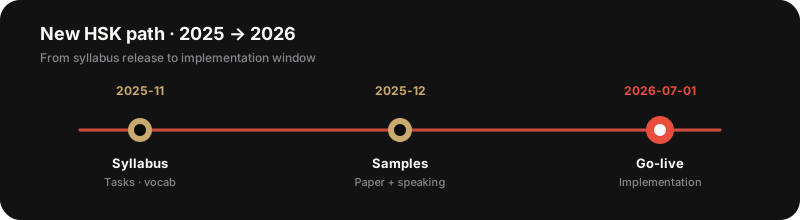
What changed in 2025–2026?
| Item | Detail |
|---|---|
| Syllabus release | November 2025 |
| Sample structures | December 2025 (HSK 1–6 paper samples; speaking samples from level 3) |
| Implementation | July 2026 |
| Design focus | Task ability (“can do”), topics, vocabulary, characters, grammar |
| Advanced band | HSK 7–9 described together (life/work/academic scenes) |
Sources for the numbers below: the Nov 2025 syllabus file used by NiHaWa (task + vocabulary + character outlines) and the Dec 2025 “new HSK 1–6 exam structure & sample questions” booklet. We paraphrase structure and counts only — we do not republish official papers.
New HSK levels and vocabulary (approx.)
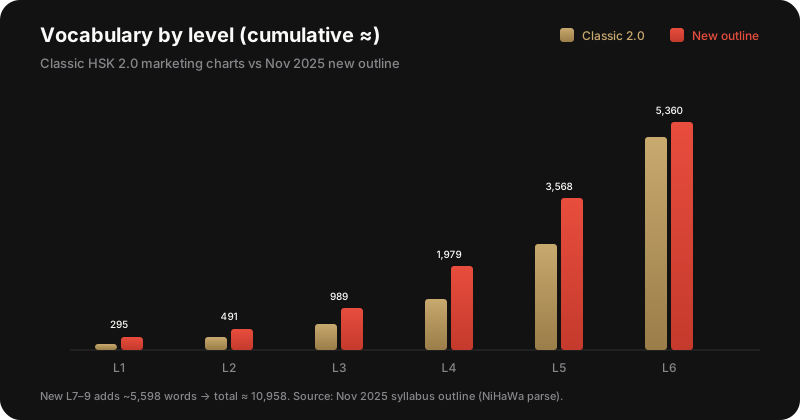
Vocabulary is cumulative (each level adds words on top of lower levels). Counts are from the Nov 2025 vocabulary outline:
| Level | Words added | Cumulative ≈ | What you can roughly do |
|---|---|---|---|
| HSK 1 | 295 | 295 | Greet, introduce yourself, simple daily facts |
| HSK 2 | 196 | 491 | Short exchanges, basic descriptions |
| HSK 3 | 498 | 989 | Everyday life, simple study/work talk |
| HSK 4 | 990 | 1,979 | Clear opinions, longer narratives |
| HSK 5 | 1,589 | 3,568 | Work/social discussion, denser reading |
| HSK 6 | 1,792 | 5,360 | Complex topics, formal writing/listening |
| HSK 7–9 | 5,598 | ~10,958 | Professional / academic advanced use |
Character outline (reading, cumulative ≈): L1 110 → L2 219 → L3 329 → L4 441 → L5 553 → L6 665 → L7–9 ~931.
Compare with the classic “HSK 2.0” marketing numbers (150 / 300 / 600 / 1,200 / 2,500 / 5,000): the new outline is heavier at the lower bands and builds toward a much larger advanced lexicon.
Full breakdown: HSK vocabulary 2026 · Side-by-side history: HSK 3.0 vs 2.0.
Paper exam structure (new HSK 1–6)
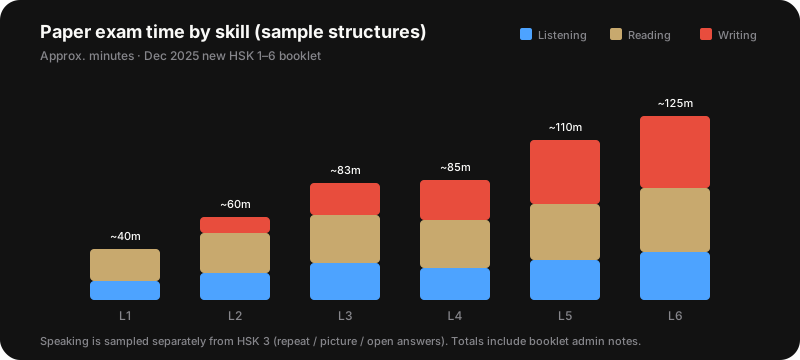
Approximate totals from the Dec 2025 sample structures (includes admin time notes in the original booklet):
| Level | Listening | Reading | Writing | Items ≈ | Time ≈ |
|---|---|---|---|---|---|
| 1 | 20 (~12 min) | 20 (20 min) | — | 40 | ~40 min |
| 2 | 25 (~17 min) | 25 (25 min) | 10 (10 min) | 60 | ~60 min |
| 3 | 30 (~23 min) | 30 (30 min) | 10 (20 min) | 70 | ~83 min |
| 4 | 32 (~20 min) | 32 (30 min) | 6 (25 min) | 70 | ~85 min |
| 5 | 35 (~25 min) | 35 (35 min) | 2 (40 min) | 72 | ~110 min |
| 6 | 40 (~30 min) | 40 (40 min) | 2 (45 min) | 82 | ~125 min |
Details and how to train each section: New HSK exam structure.
Speaking is part of the game now
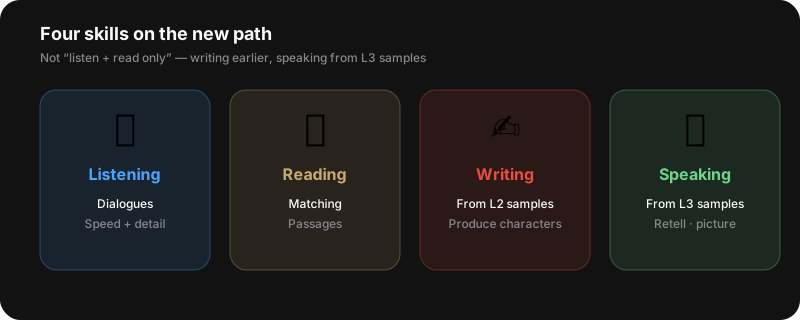
Classic learner advice said “HSK doesn’t test speaking.” That was always incomplete (HSKK existed), and it is misleading for the new system.
From HSK 3 speaking samples:
- Listen and repeat / retell
- Picture description
- Open answers (1.5–2.5 minutes)
If your goal is real-world Chinese or the new exam path, train output with feedback every day — not only flashcards. See HSK speaking test guide and AI speaking practice.
How the syllabus is organized (why apps should care)
The Nov 2025 outline is not a word list only. It stacks:
- Task outline — what you can understand / say / read / write in scenes
- Topic outline — nested life topics
- Vocabulary outline
- Character outline (recognition + writing sets)
- Grammar outline
HSK 1 alone has 15 task modules (self-intro, weather, food, shopping, travel, school, work…). Practice by scene, not by random decks. Start here:
- HSK 1: introduce yourself
- HSK 1: food and dining
- HSK 1: shopping
- HSK 1: travel and directions
- More beginner scenes in Learn Chinese
Timeline overview: New HSK 2026.
How to prepare (efficient, not miserable)
1. Train tasks, not isolated words
Memorizing 2,000 words with no sentences is slow. Learn words inside the task you need this week (ordering food, asking directions).
2. Split the paper skills
- Listening: graded audio, then normal speed
- Reading: timed short texts + questions
- Writing: character production from HSK 2 upward on the new paper path
- Speaking: daily timed answers (the missing piece for most apps)
3. Use structure knowledge before “full mocks”
Know how many sections and minutes you face (table above), then do timed drills. Official past papers still matter when available; our pages explain formats with original practice ideas, not copied booklets.
4. Keep a speaking loop even if you only need a certificate
Learners who speak daily usually improve listening and reading faster because production forces retrieval.
Realistic timeline (30–60 min/day)
| Goal | Rough time |
|---|---|
| Solid HSK 1 tasks | 1–2 months |
| HSK 2 comfort | 3–5 months |
| HSK 3 usable daily Chinese | 6–10 months |
| HSK 4 work/life usefulness | 12–20 months |
| HSK 5–6 | multi-year deliberate practice |
Should you take the official test?
Worth it if you need proof for jobs, universities, or visas — or you study harder with a deadline. Otherwise use the levels as a roadmap and keep building speaking.
Free next steps on NiHaWa
- Free HSK level test — unofficial band estimate
- Tone pair trainer — fix the #1 beginner blocker
- Pinyin converter
- New HSK 2026 overview
- Join the waitlist on any page for AI conversation practice aligned to real scenes
Bottom line: the new HSK is a task + four-skill ladder with a July 2026 implementation window. Learn by scene and output, track vocabulary bands honestly, and treat speaking as core training — not an optional extra.